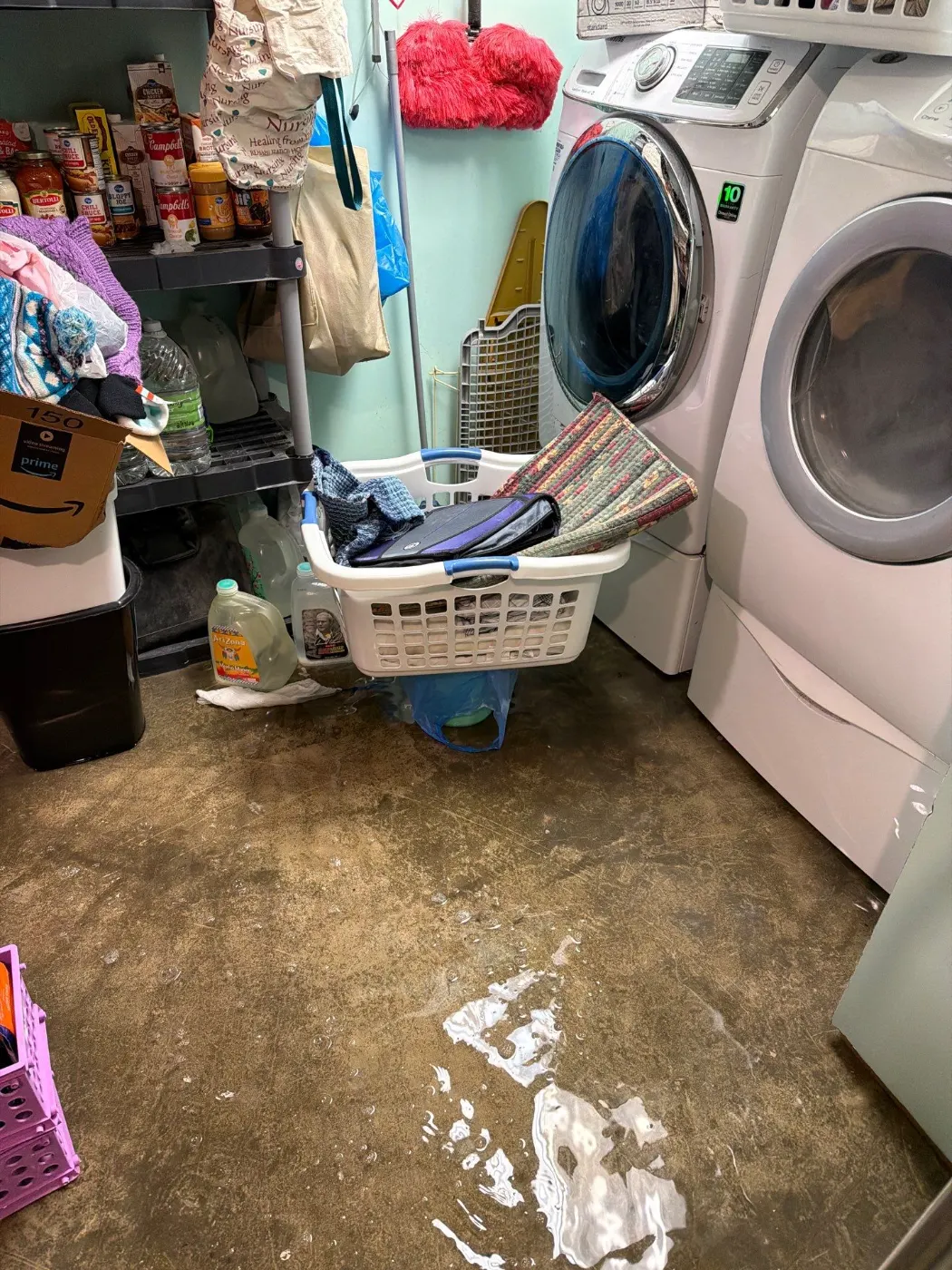
Water in Your Meridian-Kessler Basement?
Meridian-Kessler Water Restoration delivers water damage restoration across Meridian-Kessler with fast, around the clock emergency response when a supply line lets go, a sewer backs up, or storm water finds its way into the basement. Our IICRC certified crews handle the full job, from extraction and structural drying through reconstruction, and coordinate directly with your insurance carrier.
If the phone rings out, you'll hear back from us within 15 minutes.


Flooded basement, burst pipe, or sewage backup in Meridian-Kessler? Meridian-Kessler Water Restoration answers 24/7 with certified crews, fast water removal, and drying that gets measured, not guessed, plus full insurance documentation. Call (317) 342-7736.
- Services: water damage restoration, basement flooding, sewage cleanup, storm damage
- Service area: Meridian-Kessler, Marion County, IN and surrounding areas
- Response time: Same day for Meridian-Kessler inquiries; 24/7 emergency service available
- Licensed and insured (License #RC21100059)
- Serving Meridian-Kessler, IN since 2018
Schedule Your Free Damage Assessment
Inspection on a Meridian-Kessler home is a room by room walkthrough, not a glance at the visible wet spot. Walls are measured with non penetrating meters at multiple heights to track how high the water wicked, then confirmed with a penetrating pin meter where readings flag elevated moisture. Baseboards, trim, and subfloors are checked. Insulation is pulled in suspect cavities. We look behind cabinets, under sinks, around water heaters and washing machines, and along the full basement perimeter and slab joints, since the basement is where most Meridian-Kessler losses end up traveling. A thermal imaging camera maps hidden cold spots that signal trapped moisture, and a hygrometer logs ambient temperature and humidity. Thorough mapping is what prevents the most expensive problem in this industry, hidden moisture that fuels mold growth 30 days after the visible water is gone.
I agree to be contacted by Meridian-Kessler Water Restoration regarding my inquiry.
Indiana weather puts Meridian-Kessler homes through every kind of water stress: hail-driven roof damage, wind-driven rain, spring flooding, summer storms, winter freeze-thaw cycles. The result is a steady flow of water emergencies in Meridian-Kessler homes year-round. We respond to all of them.
Insurance claims move at the speed of the file. Complete water damage documentation, cause photos, moisture logs, itemized scope, gives Meridian-Kessler adjusters what they need to approve work quickly. Restoration companies that build the file properly keep Marion County claims from stalling.
When Meridian-Kessler neighbors ask who to call for water damage, the answer that gets passed along is earned in basements and crawl spaces, one saved floor at a time. Referrals built this company, which keeps every job honest.
Payment Options That Work for You
We partner with established lenders so Meridian-Kessler Water Restoration clients can spread the cost of a major restoration project into manageable payments. Ask your project lead about current options.
Pay for your project at a later time, but lock in today's pricing. Ideal for homeowners waiting on insurance settlements.
- No payments for 12 months
- No interest if paid in full
- Lock in current pricing today
Divide your project cost equally across 12 months with zero interest. Most homeowners choose this option for predictable budgeting.
- Equal monthly payments
- 0% interest for 12 months
- Simple, predictable budgeting
Spread your investment over up to 20 years with fixed equal payments. The right choice for larger projects or homeowners who prefer lower monthly amounts.
- Up to 20-year terms available
- Fixed equal payments
- Ideal for larger restoration projects
Subject to credit approval. Ask your project lead for current terms and promotions.
Water Damage Restoration Services for Meridian-Kessler Homes
Meridian-Kessler Water Restoration works on homes and businesses, and every job starts with a moisture check of the affected rooms.
Water Damage Restoration in Meridian-Kessler
Serving Meridian-Kessler: full scope water damage restoration covering source identification, extraction, structural drying, antimicrobial application when warranted, and reconstruction of affected finishes. Performed to the IICRC S500 standard.
Learn moreBasement Flooding in Meridian-Kessler
For Meridian-Kessler addresses, response for flooded basements caused by sump pump failure, foundation seepage, supply line breaks, or storm water intrusion. Includes extraction, drying, and restoration of affected walls, flooring, and storage contents.
Learn moreSewage Cleanup in Meridian-Kessler
Serving Meridian-Kessler: category 3 black water cleanup for sewer backups, toilet overflows with solids, and contaminated water events. Includes containment, removal and disposal of affected porous materials, antimicrobial treatment, and verified sanitization.
Learn moreStorm Damage in Meridian-Kessler
In Meridian-Kessler, water intrusion response after severe weather events, including wind driven rain through compromised exterior openings, foundation seepage from saturated soil, and water damage following storm caused structural breaches.
Learn moreCommercial Water Restoration in Meridian-Kessler
For Meridian-Kessler addresses, water damage restoration for commercial properties, scaled to the square footage and operational needs of the business, with equipment and staffing sized to minimize downtime.
Learn moreCommercial Flood Damage Cleanup in Meridian-Kessler
For Meridian-Kessler addresses, flood response for commercial buildings, including bulk water extraction, structural drying of finished and unfinished spaces, and salvage of inventory and equipment where feasible.
Learn moreCommercial Sewage Cleanup in Meridian-Kessler
Serving Meridian-Kessler: black water and sewage response for commercial facilities, performed under IICRC S500 contamination protocols with proper containment, disposal, and sanitization for occupied buildings.
Learn moreCommercial Mold Remediation in Meridian-Kessler
For Meridian-Kessler addresses, mold remediation for commercial properties under the IICRC S520 standard, including containment, HEPA-filtered negative air, removal of contaminated materials, and post remediation verification.
Learn moreCommercial Storm Damage in Meridian-Kessler
In Meridian-Kessler, commercial storm response covering water intrusion, debris removal from interior spaces, structural drying, and reconstruction of affected building components.
Learn more
Local Expertise, Real Results
Restoration is the work, not a side service. That is the basis for trust with Meridian-Kessler homeowners who need it done right the first time.
What Meridian-Kessler Water Restoration brings to Meridian-Kessler restoration: a phone that gets answered, a crew that shows up, work that gets documented, and a closeout that supports your claim. Indiana licensed. IICRC trained. Aaron Christy runs the work.
Meridian-Kessler Water Restoration serves Meridian-Kessler homeowners along with the surrounding Marion County neighborhoods, including Butler-Tarkington, Mapleton-Fall Creek, Herron-Morton Place, and the SoBro stretch leading into Broad Ripple. Restoration work has been our focus from day one, not a sideline to a general contracting business, which is why every crew dispatched to Meridian-Kessler is staffed with IICRC certified technicians on a licensed and insured payroll. You will not see temp work crew pulling up to your driveway. You get a trained crew, the right equipment on the truck, and a project manager who answers the phone when you call back.
Every job follows the IICRC S500 standard for water damage restoration, and any mold work follows IICRC S520. In practice, that means a Meridian-Kessler home gets a proper moisture assessment first, thermal imaging to find what is hidden behind plaster and lath, penetrating meter readings to confirm where water actually traveled, and a written scope before any equipment runs. Extraction comes before drying, drying is monitored with daily logged readings, antimicrobial is applied where the Category and contamination warrant it, and structures are verified dry against unaffected baseline materials before reconstruction begins. The order matters. Skipping steps is how homeowners end up with mold blooming behind new drywall six weeks later.
Our Promise
Three commitments to every Meridian-Kessler homeowner who calls. First, fast emergency response dispatched day or night, because every hour without extraction expands the damage into more materials. Second, IICRC certified technicians trained to the S500 standard handle the work, a consistent crew of subs. Third, a free on site inspection before any work begins, with insurance coordination handled directly with your adjuster if you have an active claim.
The Case for Our Crew in Meridian-Kessler
Meridian-Kessler homeowners get certified technicians, written scopes before work begins, and a rebuild handled by the same crew that pulled the water out.
Around the Clock Emergency Response
Water damage does not wait for business hours, and neither do we. Crews are on call day and night for Meridian-Kessler, with extraction equipment, dehumidifiers, and air movers already loaded on the trucks. A certified technician leads every dispatch, so the assessment starts the moment we arrive.
IICRC Certification That Matters
Our technicians are trained to the IICRC S500 standard for water damage and S520 for mold remediation. In practice, that means proper Category classification, monitored drying to a verified dry standard, and antimicrobial protocols when contamination warrants it. You get restoration done to the industry standard, not someone's best guess.
Mitigation Through Reconstruction
Most Meridian-Kessler losses need more than drying. Drywall comes out, flooring comes up, trim gets pulled. We handle the rebuild on the same job, drywall through paint, so the home gets put back together without a separate general contractor stepping in halfway through.
Insurance Coordination Done Right
We document every affected area with photos, written moisture readings, and a clear scope of work, then coordinate directly with your insurance carrier. Most major insurance carriers expect that level of documentation, and it is how Meridian-Kessler claims process cleanly. You focus on your family, we handle the paperwork side with your adjuster.
Real Jobs. Real Results.
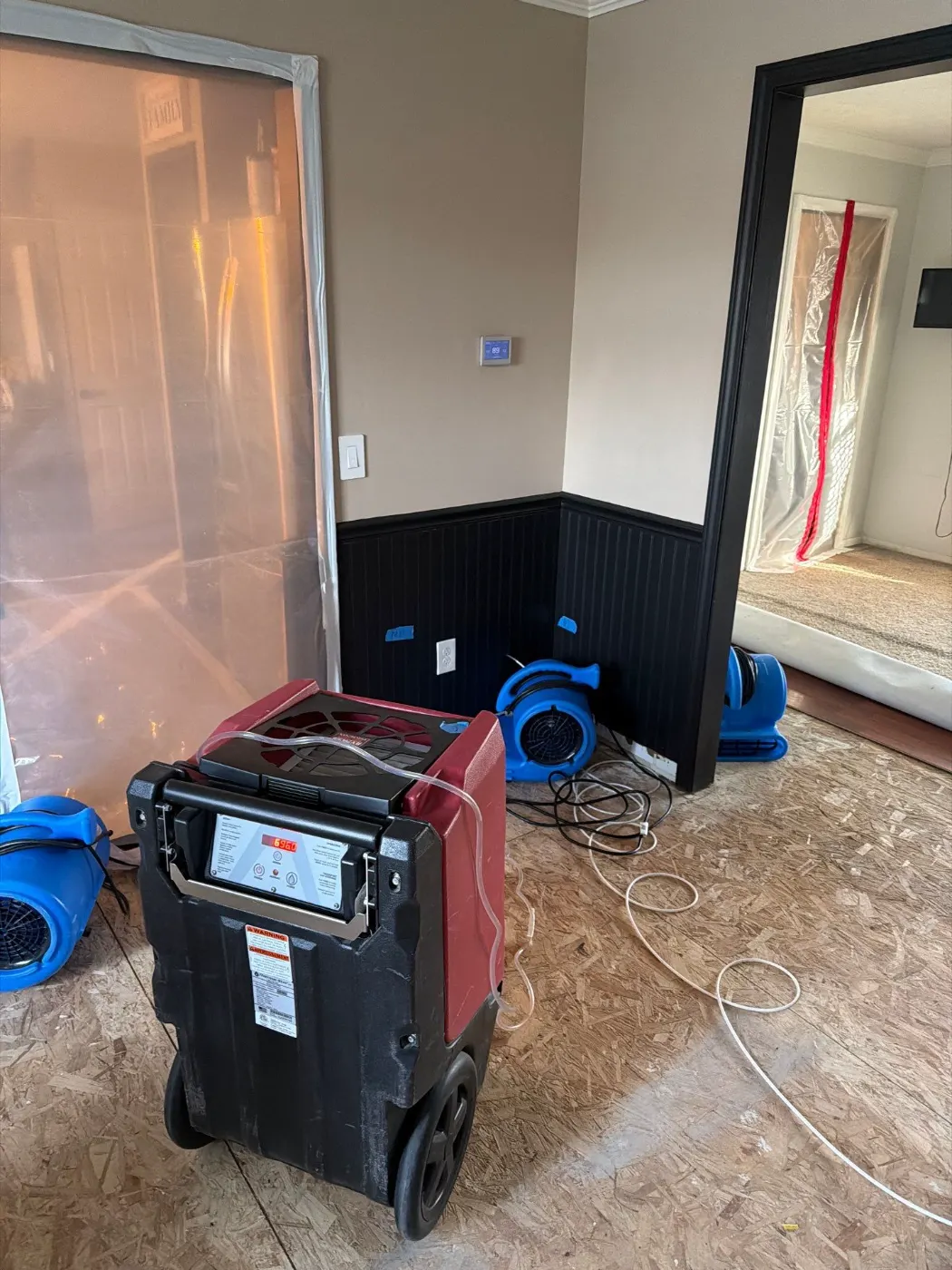
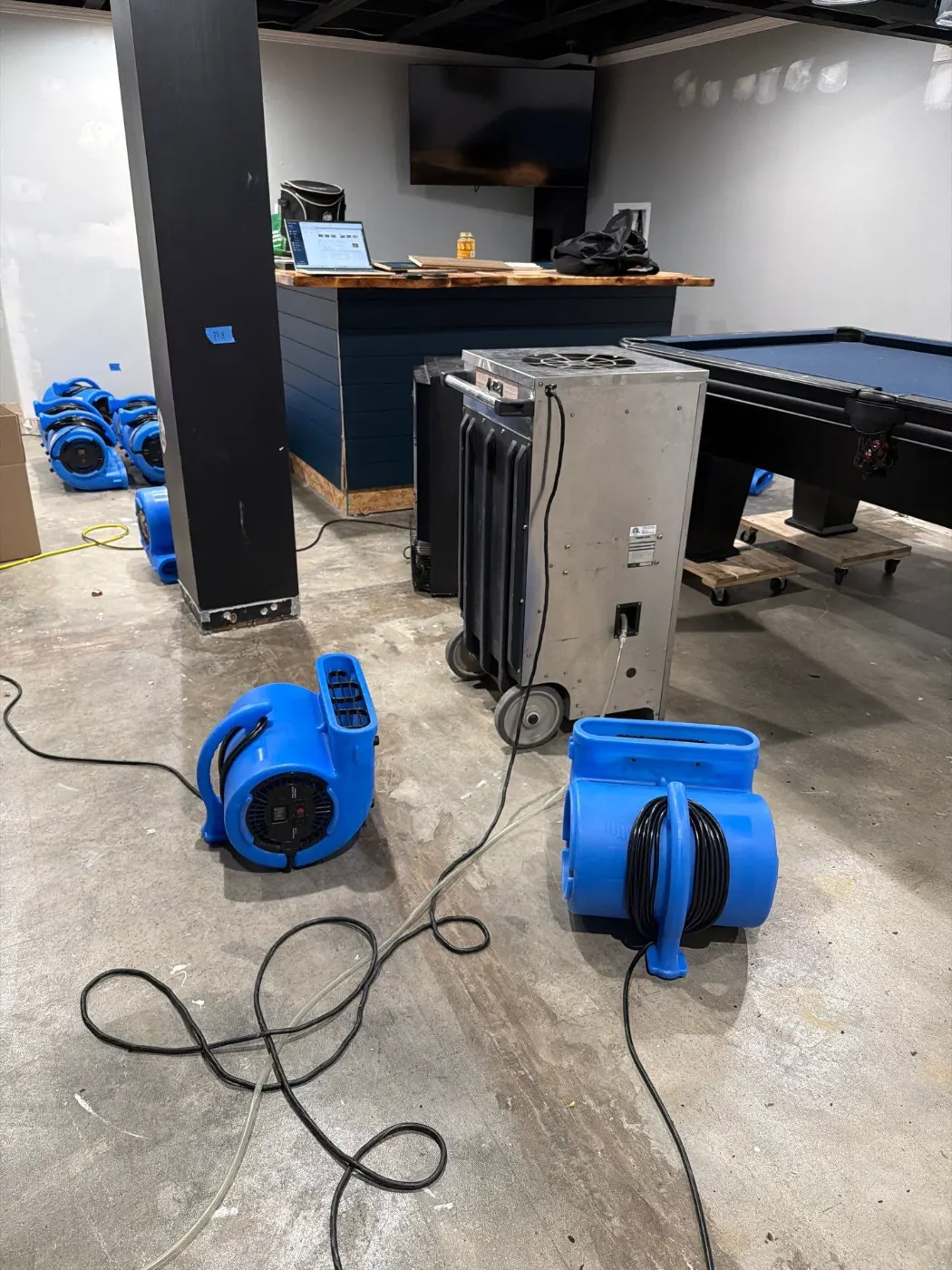
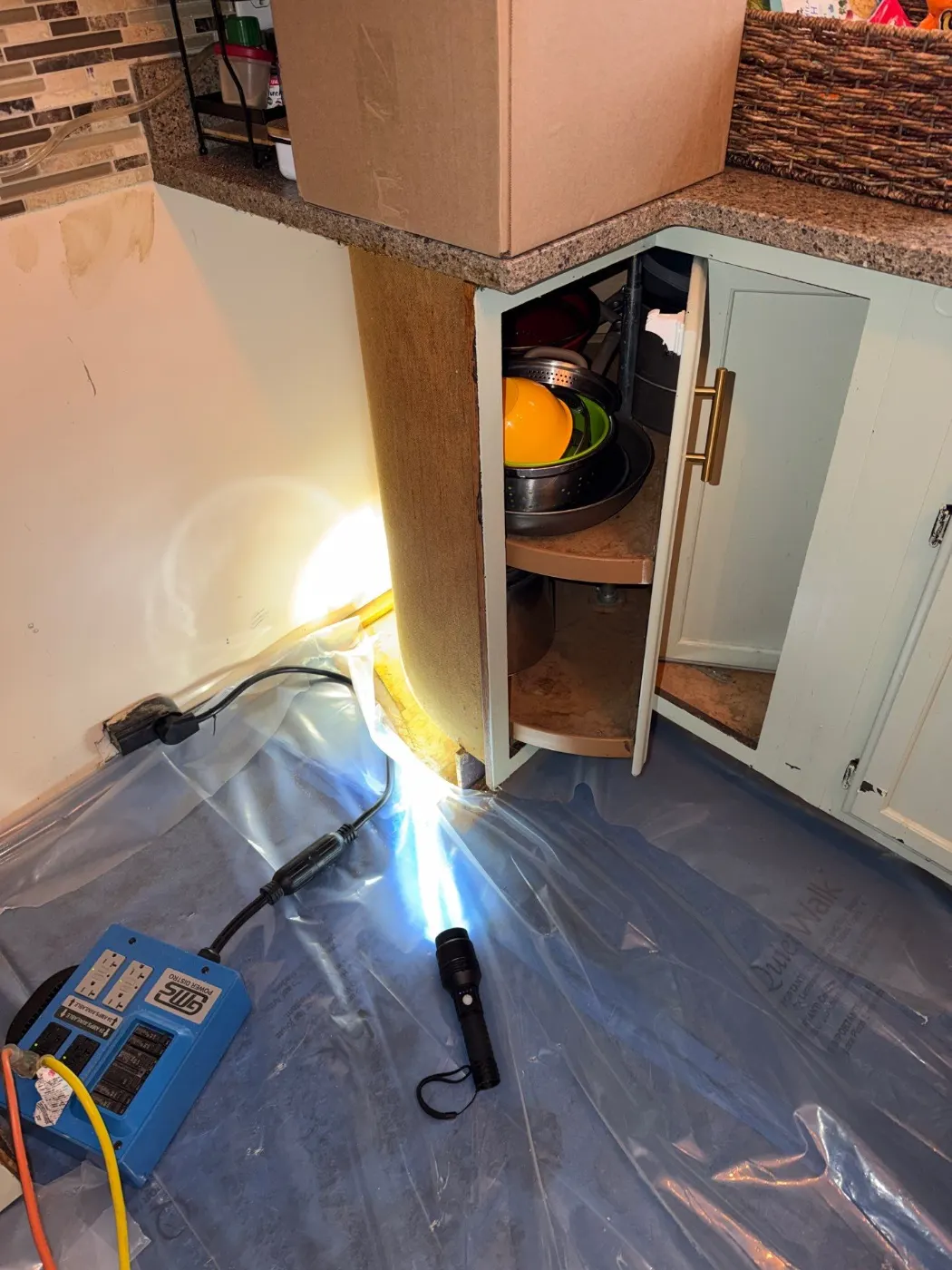
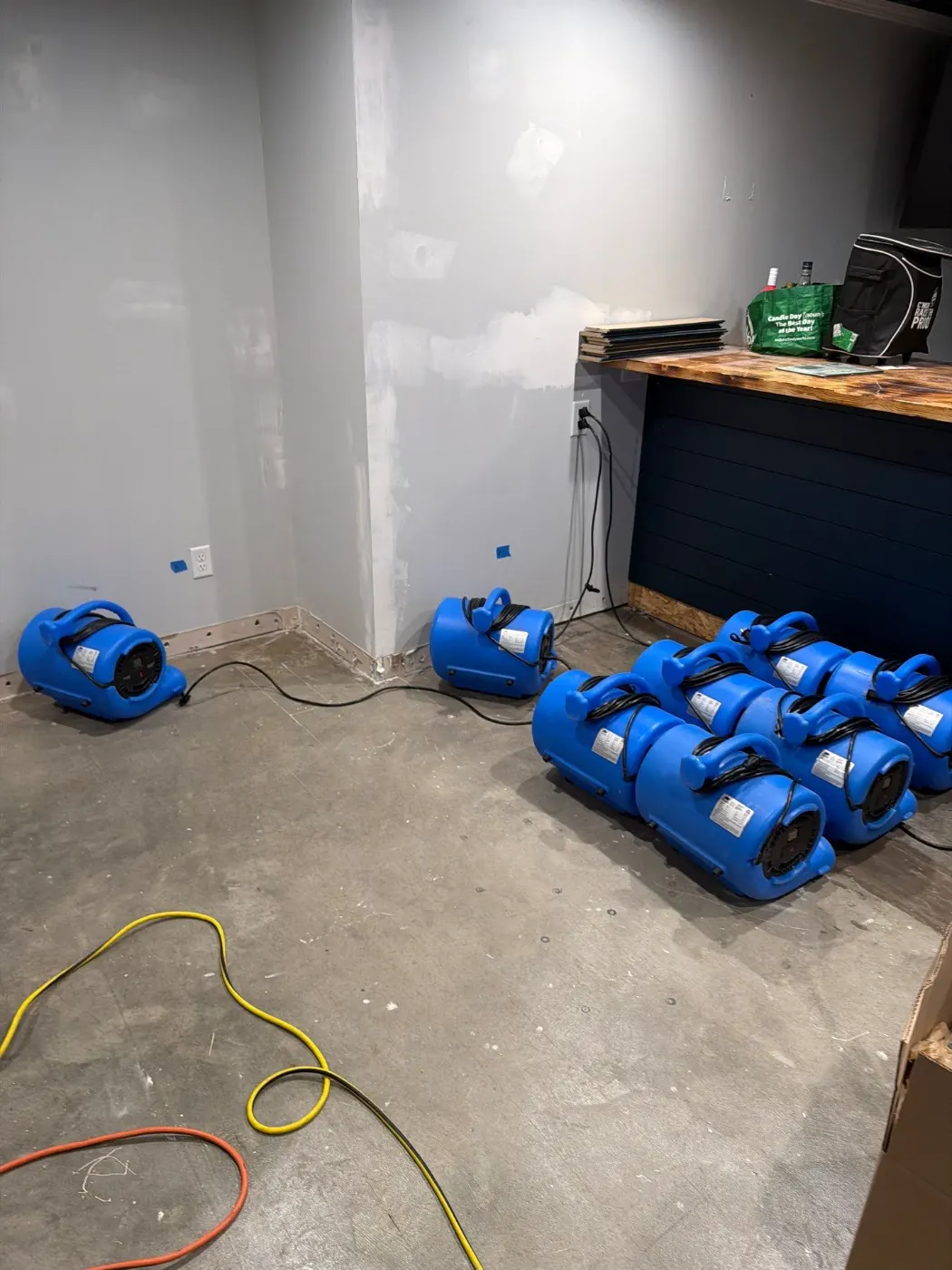
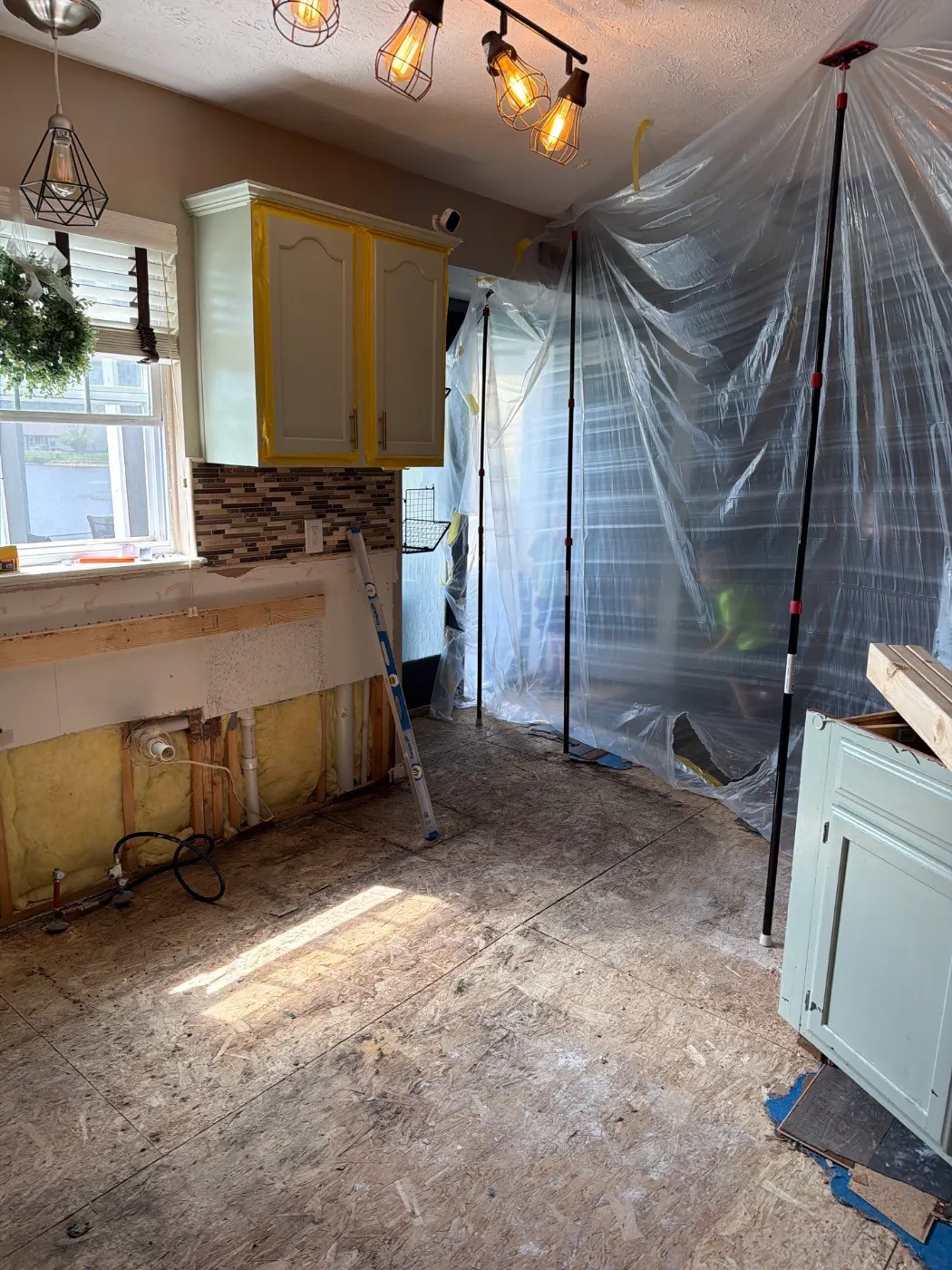
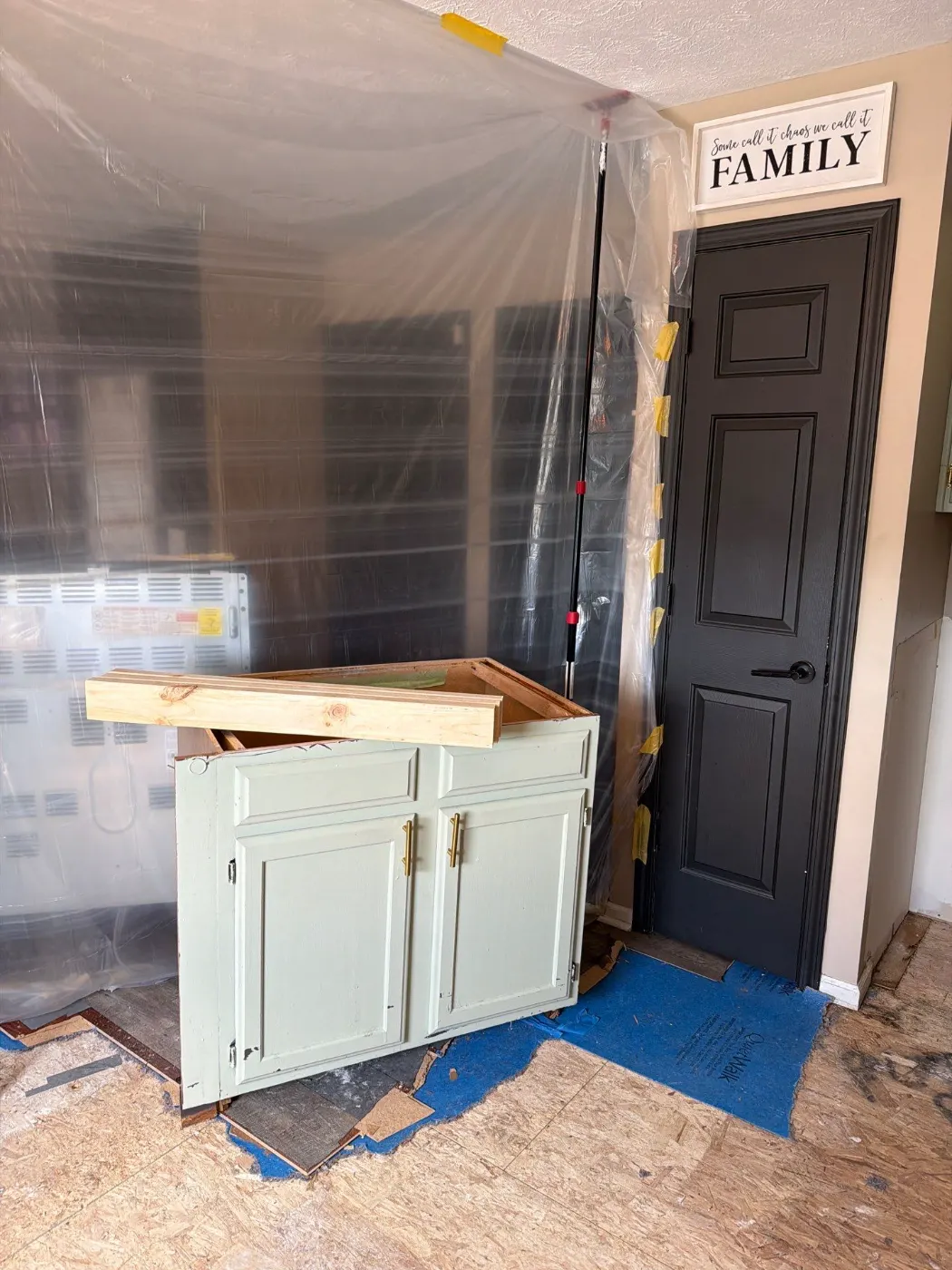
Actual restoration jobs completed across Meridian-Kessler and surrounding Marion County neighborhoods. Real homes, real losses, real before and after work documented for the claim file and the homeowner.
What to Expect on a Meridian-Kessler Job
The first phase on any Meridian-Kessler loss is moisture assessment and Category determination. A certified tech walks the home, identifies the source (broken supply line in a finished basement, dishwasher gasket failure, toilet overflow, sewer backup through a floor drain, storm intrusion through a foundation crack), and classifies the water under IICRC S500 as Category 1, 2, or 3. Thermal imaging finds hidden moisture in walls and ceilings, and meter readings confirm the boundary of the affected area. A written scope and moisture map are produced before any drying equipment is set, which typically takes one to two hours.
Second phase is documentation and insurance coordination. Every affected room is photographed and videoed before mitigation begins, meter readings are logged in writing, and the moisture map is preserved as part of the claim file. We contact your insurance adjuster directly, present the scope of work, and justify the mitigation steps against the IICRC S500 standard so the carrier has what they need to authorize the job. Most Meridian-Kessler homeowners never have to chase paperwork or argue scope with their adjuster, we handle that conversation while the drying equipment is already running.
Third phase is drying execution and reconstruction. Air movers and commercial dehumidifiers are placed based on structural drying calculations for the affected square footage, with daily monitoring and logged moisture readings until materials hit the dry standard matched against unaffected baseline materials in the home. Controlled demolition is done only where materials cannot be saved. Then reconstruction follows, drywall hung and finished, insulation replaced, flooring installed, trim and baseboards reset, paint to match. The home goes back together properly, not patched.
Rapid Dispatch and Setup
The truck arrives with extraction equipment, dehumidifiers, air movers, thermal imaging, and meters already on board. A certified technician leads the crew, walks the loss with you, and starts extraction without waiting for a second trip. Setup happens the same visit.
Category Determination per S500
Every Meridian-Kessler job gets a written Category classification under the IICRC S500 standard. Category 1 (clean), Category 2 (gray), or Category 3 (black) drives every decision after, from PPE to what materials can be dried in place versus removed. Readings are logged, not eyeballed.
Insurance Carrier Partnership
We work with your insurance carrier directly, providing photo documentation, written moisture maps, and a justified scope of work tied to industry standard. Your adjuster gets what they need to authorize mitigation. You get a clear scope upfront, not surprise line items at the end.
Drying to a Verified Standard
Equipment runs until moisture content in affected materials matches the unaffected baseline in the home. Daily readings are logged and reviewed. Reconstruction does not start until structures are confirmed dry, because nothing kills a restoration job like rebuilding over wet framing.
How Water Gets Into Meridian-Kessler Homes
Refrigerator Ice Maker Line
Plastic ice maker tubing goes brittle with age and splits at the saddle valve or the compression fitting. A slow drip behind a refrigerator can run for months, and in Meridian-Kessler homes over hardwood it usually announces itself as a raised seam three feet away.
Heavy Rain and Saturated Ground
Ground that has already taken a week of rain has nowhere to put the next storm. The water table comes up, pressure builds against the foundation, and it finds the cold joint, the tie holes, and the open block cores.
Ice Dam Meltwater in the Wall
Ice dam water rarely drips in the middle of a room. It comes in at the top of the exterior wall, runs behind the drywall, and turns up as a wet baseboard or a stain over a window. Meridian-Kessler homeowners blame the window, and the window is fine.
Toilet Supply Line Leaks
A plastic toilet supply line that develops a pinhole leak overnight can produce more water damage than a sudden burst. The slow flow saturates everything around the toilet before anyone notices.
Appliance Failures
Appliance water connections in Meridian-Kessler homes are common failure points. Ice maker supply lines, dishwasher hoses, washing machine connections all eventually fail. The leaks behind them run unseen.
Slab Leak Under the Floor
A supply line under a slab can leak a long time before anything looks wrong. The early signs are a warm patch on the floor, a water bill that climbed for no reason, or one section of flooring that lifted while everything around it stayed flat.
First Hour Checklist for Meridian-Kessler Homeowners Facing Water Damage
The first hour after you find water is about two things, stopping the water and keeping everyone safe around it. The steps below are the ones that help most while our crew is on the way to your Meridian-Kessler home, and you can do all of them with what's already in the house.
1. Stop the source
For a toilet or a washing machine, close the small shutoff valve behind it. If the leak is bigger, or you can't tell where it starts, close the main valve for the whole house and leave it off until our crew checks the source.
2. Watch the ceiling
If water is coming through a ceiling, keep people out of the room below. A ceiling that sags or bulges can hold a lot of water, and the light fixtures in it may be wet, so turn those circuits off at the panel if you can do it safely.
3. Treat sewage water with care
Water from a sewer backup can carry bacteria, so avoid touching it with bare skin. Close the door to the affected room if you can, and keep everyone on a dry floor until the crew arrives with protective gear.
4. Save the paperwork
Deeds and family records are hard to replace, so move them to a dry room before anything else. Put them in a plastic bin or a sealed bag if the rest of the house is damp.
5. Protect wood floors and furniture
Wood soaks up water quickly, so wipe off what you can and set furniture legs on foil or small blocks. Pick up area rugs so the floor under them can start to dry, and roll heavy ones onto a dry surface.
6. Hold off on tearing anything out
Leave soaked drywall and flooring in place until our crew has measured it. Some materials dry where they are, and the readings tell us which ones can stay, so early demolition can mean replacing things that could have been saved.
7. Let the air reach wet spots
In rooms with clean water, open closet and cabinet doors so air reaches the wet spots. On a hot, sticky day, keep the windows closed and leave the air conditioning on, since it pulls moisture out of the air.
8. Make the call early
Waiting until morning gives the water all night to soak into floors and walls. Our line is open 24/7, so call once the water is shut off and everyone is safe.
Keep this list handy, and call us as soon as the water is shut off so the crew can start drying your home.
Three Simple Steps
This is what happens after you call us about water in your Meridian-Kessler home, in the order it happens.
Dispatch on the Call
The sooner extraction starts, the smaller the job stays. Commercial extraction and containment materials arrive with the crew.
The Moisture Survey
The moisture map covers every room water could have reached, not just the wet ones. We contact your adjuster directly and match scope to coverage.
Dry Standard Reached
Dry standard is proven with logged readings, usually inside 3 to 5 days. One project manager runs it from extraction through final paint.
How You Get a Clear Record of the Water Damage in Your Meridian-Kessler Home
The photo report brings the hidden part of water damage out into the open, with pictures and readings from behind your walls and under your floors. We review it with you before work moves forward in your Meridian-Kessler home.
The source, in pictures
Whether it was a cracked pipe or a sump pump that quit, the first photos in the report show the source up close and in the context of the room around it. That helps your plumber see the same thing we saw.
Water you can't see
Water often ends up somewhere out of sight, like under cabinets or inside a wall cavity. The report shows those spots with readings and photos so nothing gets closed back up while it's still wet.
Photos of every affected room
The crew photographs each affected room before anything is moved or removed, then again as the work moves along. You'll see the same corner of the same room on the first day and on the last.
What has to be removed
When a material is too wet to save, the report says so and shows the readings and photos that back it up. You'll know the reason for every cut before the crew makes it.
Daily readings while it dries
While the equipment runs, the crew comes back to take new readings, and those go into the report too. You can follow the numbers as they drop and see which rooms are closest to finished.
Questions are welcome
Ask about anything in the report that doesn't add up. The crew can take a new reading while you watch and explain what it means for that room, and seeing a dry wall next to a wet one makes the numbers easier to follow.
A record that's yours
Keep the report with your home records. We document damage with a photo report and walk you through what we found, so you can decide with your insurance company. Your policy will say what's covered, so read it before you call them.
Want to know what the crew will capture in your Meridian-Kessler home? Ask when you call, and we'll describe the photo report before anyone arrives.
Questions to Ask a Water Damage Company in Meridian-Kessler
Ask any restoration company in Meridian-Kessler these questions before you sign a work authorization.
Who will be working in my home?
Ask whether the crew works for the company you called or for a subcontractor, and who's in charge on site each day.
How will you show me it's dry?
Ask for moisture readings on the first visit and the last one, so you can see the numbers reach dry standard.
Can I see an itemized estimate?
Ask for every line item in writing. Many insurers price water losses in Xactimate, so an estimate in that format is easier for an adjuster to review.
Does my policy require a certain company?
Ask your adjuster before you sign anything, and read the work authorization so you know what you're agreeing to.
What happens if you find mold?
Ask how mold behind walls or under floors gets handled, and whether that work is priced apart from the drying.
Who handles repairs after drying?
Ask who replaces drywall, flooring, paint and trim once the structure is dry, and whether one company can do both stages.
Indiana Weather Drives Restoration Calls Year Round
Indiana weather drives most of the water damage calls into Meridian-Kessler. Spring rains saturate soil and push water through aging foundation walls, summer thunderstorms overwhelm the combined sewer system and back wastewater into basements, and January freezes burst supply lines in older walls and crawl spaces. The seasons change. The calls do not stop.
Spring Saturation Flooding
Central Indiana spring rains saturate the soil around Meridian-Kessler foundations, and the older basement walls common to this housing stock start weeping at the cold joint where the wall meets the slab. Sump pits fill faster than pumps can clear them. When called in, we extract standing water, dry the affected materials, and address the affected finishes before mold takes hold.
Winter Pipe Bursts
Indiana cold snaps freeze supply lines in exterior walls, attics, and crawl spaces, and the burst usually shows up when the line thaws, often overnight. Galvanized and early copper supply lines in older Meridian-Kessler homes are especially prone to joint failure under freeze stress. We extract the water, open affected cavities for drying, and document everything for the claim.
Severe Thunderstorms
Summer storms in Marion County drop heavy volumes of rain in short windows, and the city's combined sewer system can push wastewater back through floor drains and basement fixtures. Storm water also finds its way through window wells and foundation cracks. Our response covers extraction, sanitization where Category 3 water is involved, and full structural drying.
Ice Dam Leaks
When snow melts on warm roof surfaces and refreezes at the eaves, water backs up under the roofing material and leaks into ceilings and exterior walls. Meridian-Kessler homes with deep eaves and older insulation are particularly vulnerable. We address the water damage side, ceiling extraction, cavity drying, and reconstruction of affected drywall and insulation once the leak source is resolved.
Local Meridian-Kessler Streets, Local Experience
Each Meridian-Kessler neighborhood below has its own mix of home ages and basements. Open one to see what that means for water damage.
Where we respond near Meridian-Kessler
The towns below sit closest to Meridian-Kessler, and calls from them go to the same dispatch line.
Meridian-Kessler Homes, and What Goes Wrong in Them
What Meridian-Kessler homes and weather mean for a water loss.
About Meridian-Kessler Homes
The vast majority of homes in Meridian-Kessler were built during the neighborhood's peak development period of the 1920s and 1930s, with the area considered fully built out by the end of World War II; a secondary wave of construction occurred between 1940 and 1969. Homes from this era were typically plumbed with galvanized steel supply lines (pre-1940s) and early copper (1940s,1960s), both of which are now well past their expected service life and prone to corrosion, pinhole leaks, and joint failures. Meridian-Kessler is dominated by two- and three story single family homes in Colonial Revival, Tudor Revival, Arts and Crafts bungalow, and American Foursquare styles, with American Foursquares concentrated south of 44th Street and bungalows prevalent east of College Avenue. Full basements are the norm across virtually all housing stock in this era of Indianapolis construction, making basement water intrusion, sump pump dependency, and foundation seepage central water damage risks throughout the neighborhood.
Where We Work in Meridian-Kessler
We cover homeowners across Meridian-Kessler near Tarkington Park (39th & Meridian Street), Indiana State Fairgrounds (southwest corner of neighborhood), Monon Trail (eastern boundary greenway), Red Key Tavern (North College Avenue), Café Patachou and Napolese (49th & Pennsylvania Street corridor), Basile Opera Center (4011 N. Pennsylvania St.), Indianapolis Public Library Branch (42nd & College Avenue area), Canterbury Park (along the Monon Trail).
Surrounding Areas We Serve
Our crew also covers Butler-Tarkington, Broad Ripple (South Broad Ripple / SoBro), Mapleton-Fall Creek, Herron-Morton Place, Midtown Indianapolis, Crown Hill.
Recent Weather Patterns
Indianapolis as a whole experiences its most significant water damage risk during spring and summer storm seasons, with the city's stormwater infrastructure regularly overwhelmed during heavy downpours, a documented pattern that pushes wastewater back into homes through combined sewer systems. Significant flooding events were reported across the Indianapolis metro in 2023, and northside neighborhoods like Meridian-Kessler's adjacent Broad Ripple corridor are specifically identified as prone to sewage backups from strained urban drainage during high rainfall events.
What Our Crew Sees in Meridian-Kessler
Meridian-Kessler's housing stock, predominantly 1920s,1940s full basement construction, places nearly every home at elevated risk for basement water intrusion through foundation wall seepage, floor drain backups, and sump pit overflow during the intense spring and summer storms that regularly overwhelm Indianapolis's aging combined sewer infrastructure. The neighborhood's iconic tree lined streets, while a defining aesthetic feature, are a documented contributor to sewer line failures, as root intrusion into century old clay or cast iron lateral lines is identified by local plumbing professionals as one of the most common causes of sewer backups in Meridian-Kessler specifically. The freeze thaw cycle of central Indiana winters adds further pipe burst risk, particularly in the older galvanized and early copper supply lines common to pre-1950s homes throughout the neighborhood.
The Meridian-Kessler Area
Meridian-Kessler has approximately 14,015 residents with a median age of 35 and an average individual income of approximately $68,249; the neighborhood maintains 5,311 households and is characterized as a predominantly upper middle class, owner occupied community. The area is one of Indianapolis's most sought after neighborhoods, with a median home sale price around $465,000, reflecting a stable, equity invested homeowner base that typically pursues prompt professional restoration over deferred repair.
Inside Water Restoration Work in Meridian-Kessler
The equipment, the containment, and the rebuild, explained.
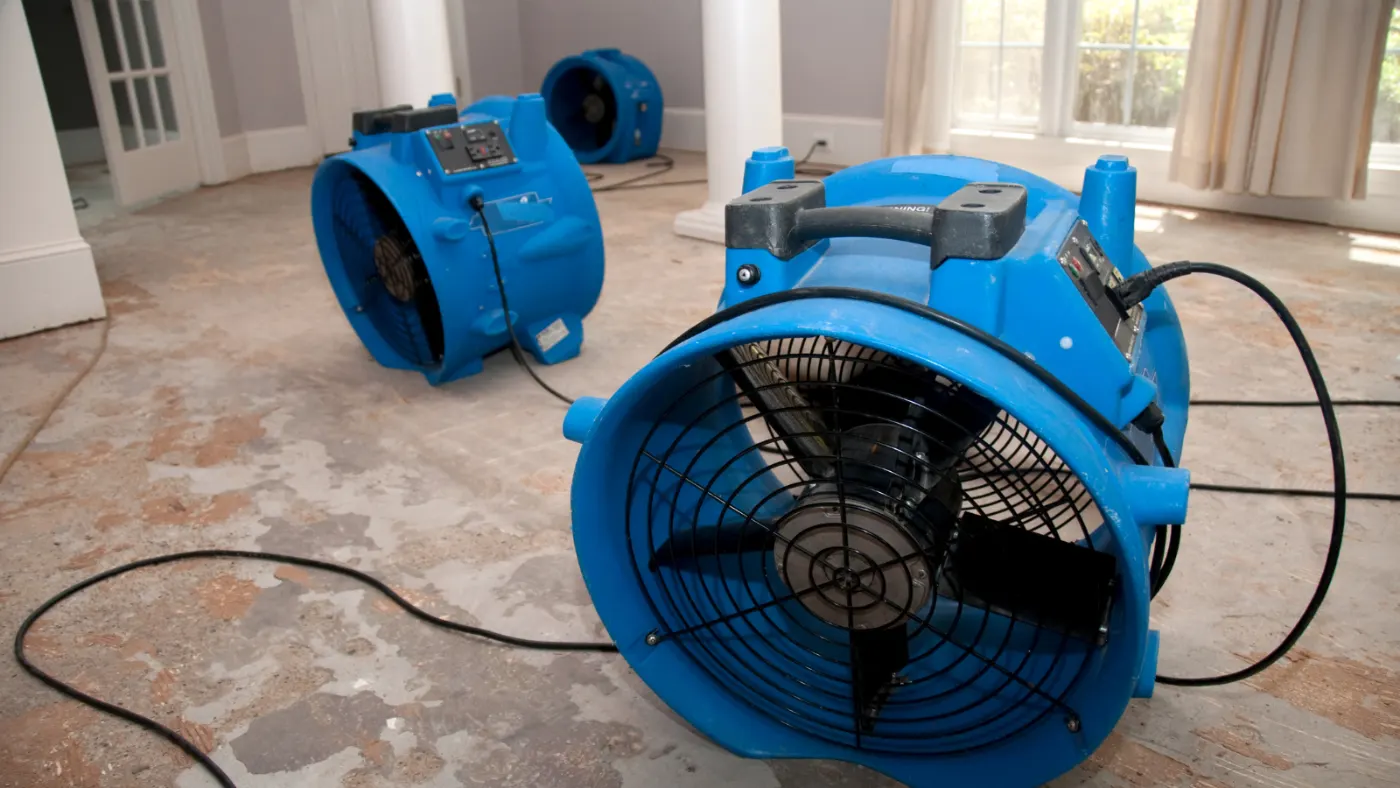
Emergency response on a Category 1 or Category 2 loss in Meridian-Kessler starts with what is already on the truck. Commercial water extraction equipment for standing water, commercial dehumidifiers sized to the affected square footage, professional air movers positioned for proper air flow, moisture meters for ongoing readings, and thermal imaging to find hidden saturation. Extraction begins promptly on arrival, and structural drying is set the same day so the clock starts on mitigation, not on a return visit. Daily monitoring with logged moisture readings continues until the home hits the dry standard. The homeowner experience matters too, work zones are contained with plastic, unaffected areas are protected, and you get a clear update on what to expect day by day until the equipment comes out.
Specialized containment is the protocol for Category 3 water (sewage backup, floodwater, long stagnant water with biological contamination) and for mold remediation under IICRC S520. Six mil plastic barriers are built floor to ceiling around the contained area, entry points are sealed, and negative air machines pull contained air through HEPA filtration before exhausting outside the work zone. Technicians work in full PPE per S520, Tyvek suits, N95 or P100 respirators, nitrile gloves, and eye protection. Contaminated porous materials are cut and bagged for disposal, remaining structure is treated with an appropriate antimicrobial, and post remediation verification with air sampling is performed when warranted. This is the phase where IICRC training matters most. Corner cutting here is what causes the long term health complaints homeowners attribute to a house that was never properly cleaned.
Reconstruction is the phase that puts the home back together. Drywall hung, taped, mudded, sanded, primed, and painted. Flooring replaced, carpet and pad, vinyl plank, hardwood refinished, tile reset. Trim and baseboards reinstalled or replaced where the originals were cut for drying access. Cabinetry repaired or replaced. Doors rehung where swelling distorted the frames. Electrical and plumbing finish work coordinated as the rebuild progresses. The structure is one project from initial call through final walk through, with a project manager you can reach. The alternative most restoration companies use is a handoff to a separate general contractor after drying, which means two crews, two schedules, two billing cycles, and a home sitting in demolition while phases line up. We handle the rebuild, so Meridian-Kessler homeowners are not chasing a second contractor.
What the Drying Days Look Like in Your Meridian-Kessler Home
You can usually stay in your Meridian-Kessler home while the drying equipment runs, as long as it's left running in the spot the crew picked for it. These notes explain what living with it looks like and when it's time for it to come out.
Warm rooms are normal
The rooms being dried often feel warmer than the rest of the house, since dehumidifiers give off heat as they work. That warmth helps the drying, so leave the thermostat where the crew asks.
Set units back the way they were
The crew places each unit based on where the readings are wettest. If you bump one or need to get past it, set it back the way it was, aimed at the same spot.
Keep windows closed
Open windows let humid outdoor air in, and the dehumidifiers then have to dry that air too. Keep the windows shut in the rooms being dried until the crew tells you to open them.
Keep cords clear
Cords run along the floor between the outlets and the equipment. Leave them where the crew routed them, and keep rugs and furniture off the cords so they stay cool and easy to see.
Keep kids and pets clear
Keep children and pets away from the cords and the warm air coming off the machines. If a room is sealed off with plastic, leave the plastic up until the crew takes it down.
What the daily check covers
On each visit the crew takes new moisture readings in the same spots as before and moves or removes equipment based on what the numbers show. Those readings go into your photo report, so you can see the change from one day to the next.
Humidity after the job
CDC recommends keeping indoor humidity as low as you can, no higher than 50 percent all day long. After the equipment leaves, a basement dehumidifier and a working bathroom fan help keep it there.
What happens after drying
Once everything reads dry, the crew pulls the equipment and you get the final readings in your photo report. Any drywall or flooring that came out can be put back after that, and the crew will talk through the rebuild with you.
Call us with any question about the equipment, and we'll help you sort it out over the phone or on the next visit.
Sources: CDC, About Mold
Water damage pricing in Meridian-Kessler
Mitigation ranges calibrated to the Meridian-Kessler market. Final pricing depends on water volume, materials affected, and IICRC Category.
Water Restoration Questions in Meridian-Kessler
Straight answers to the questions Meridian-Kessler homeowners ask most.
Expert Meridian-Kessler Restoration Crews Available Now
Water spreading through the floor right now, sewage in the basement, or a ceiling that started dripping after the last storm? Call Meridian-Kessler Water Restoration for fast emergency dispatch across Meridian-Kessler, free on site inspection with no obligation, and full coordination with your insurance carrier.