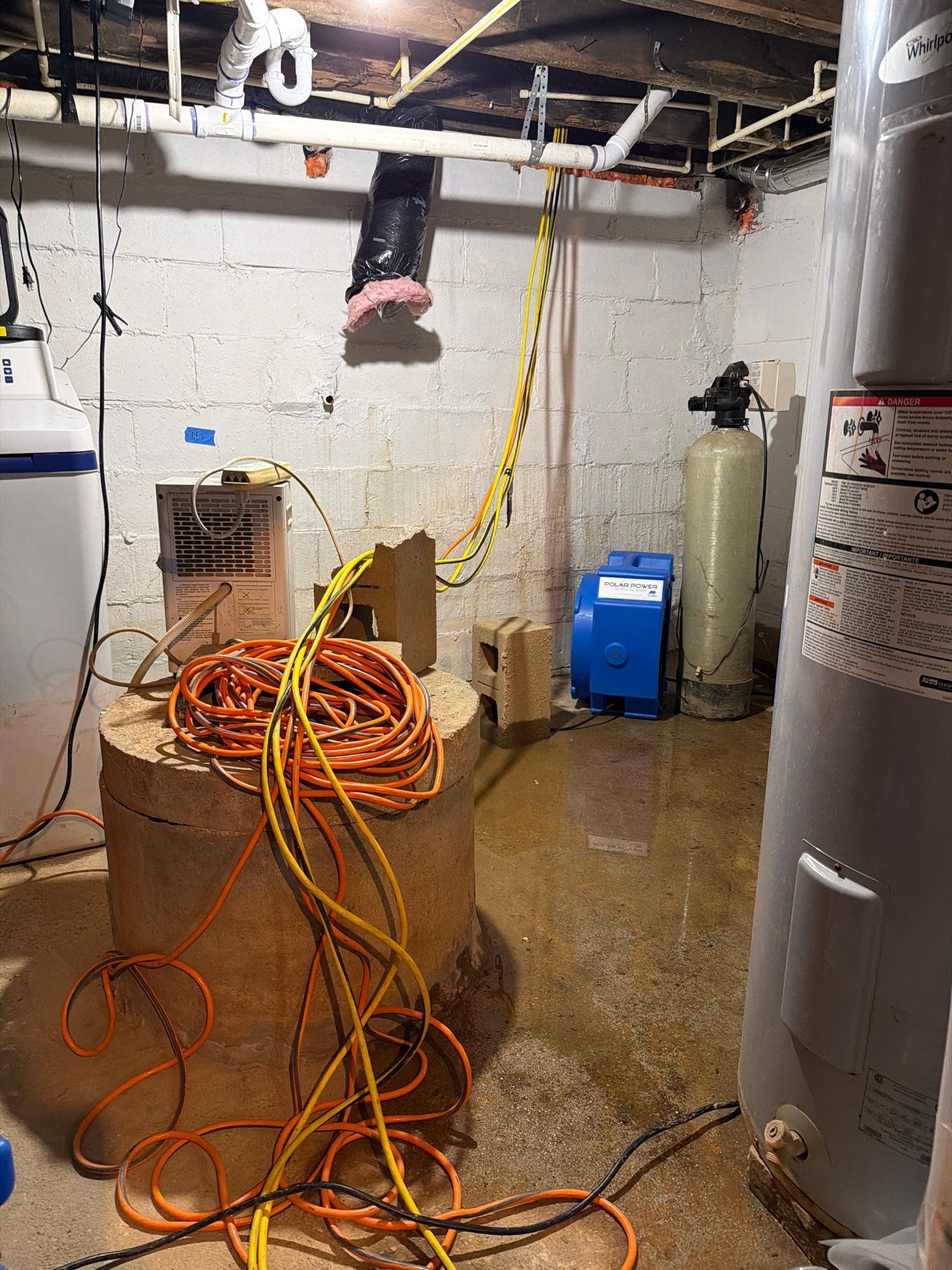
Step 1: Identify Which Phase You Are Actually In
Before you call anyone, classify the situation. The phase determines the price, the timeline, and the crew you need.
- Active loss (0 to 2 hours): Water is still flowing or pooling. Shut off the main valve. This is pre-mitigation.
- Mitigation window (2 to 72 hours): Source stopped, water present, materials wet but salvageable. IICRC S500 standard applies.
- Restoration phase (72 hours and beyond): Structure dry or being dried, rebuild and repairs underway.
- Secondary damage phase (5 to 14 days): Mold colonization, structural rot, electrical corrosion. IICRC S520 mold protocol applies.
Step 2: Categorize the Water Per IICRC S500
- Category 1 (clean water): Supply line breaks, water heater leaks, rain intrusion. Sanitizer not always required.
- Category 2 (grey water): Washing machine overflow, dishwasher discharge, aquarium failure. Antimicrobial required, porous materials often removed.
- Category 3 (black water): Sewage backup, toilet overflow past the trap, flood water from outside. Full PPE, mandatory removal of contaminated porous materials.
Category can also escalate over time. A Category 1 loss left untreated for 48 hours in warm conditions will reclassify to Category 2 due to microbial amplification. A Category 2 loss left past 72 hours typically reclassifies to Category 3. Meridian-Kessler Water Restoration documents category at intake and again at every reinspection so the claim file reflects the actual exposure.
For deeper detail on classification, review the Category 1 vs 2 vs 3 breakdown before you talk to your adjuster.
Step 6: Transition From Mitigation to Restoration
Mitigation ends when all materials hit dry standard. Restoration begins. The two phases use different scopes, different line items, and often different deductibles inside the same claim.
- Mitigation scope (typical Meridian-Kessler range): $2,500 to $7,500 for a single-room Category 1 loss. $8,000 to $20,000 for multi-room Category 2 or 3.
- Restoration scope: Drywall replacement, flooring install, paint, trim, cabinetry. Pricing varies widely based on finish level.
- Mold remediation (if triggered): Separate IICRC S520 protocol, separate containment, separate invoicing.
- Contents pack-out and pack-back: Billed per cubic foot of storage plus hourly handling. Track inventory with barcoded tags.
Step 9: Verify Your Mitigation Contractor Before Signing
- IICRC certification number on file, currently active.
- Liability insurance minimum $1 million, workers comp on every technician.
- BBB rating of A or higher, founded date verifiable.
- Written scope before work begins, not after.
- Direct insurance billing experience with your specific carrier.
- Local Meridian-Kessler address and physical equipment yard, not a virtual office.
- 24/7 dispatch with a guaranteed on-site response window of 60 to 90 minutes.
Step 10: Confirm Final Dry Standard Before Demobilization
- Take three moisture readings per affected room: one at the wettest documented point, one mid-wall, one on an unaffected control surface.
- All readings must fall within 4 points of the dry control reading for two consecutive days.
- Psychrometric chamber readings must hold at 60 percent relative humidity or lower with equipment off for 24 hours.
- Final thermal imaging sweep to confirm no hidden cold spots indicating residual moisture.
- Meridian-Kessler Water Restoration issues a written certificate of completion listing every meter reading and equipment run hour for the claim file.
Step 4: Establish the Drying Chamber (Hours 24 to 72)
- Seal off the wet zone with 6 mil poly sheeting to create a controlled drying environment.
- Target indoor temperature between 70 and 90 degrees Fahrenheit to accelerate evaporation.
- Hold relative humidity below 40 percent using LGR or desiccant dehumidifiers.
- Drill weep holes in baseboards or remove a 2 inch base strip to vent wall cavities.
- Monitor moisture content daily. Target: wood framing under 16 percent, drywall under 1 percent on a scale meter.
- Recalculate equipment load every 24 hours. As materials reach dry standard, reduce air movers to prevent over-drying and cracking of finishes.
The technical execution here is what separates mitigation from a guess. For the timing benchmarks we hold our Meridian-Kessler crews to, see how long water damage takes to dry.
Step 3: Execute Emergency Water Mitigation (Hours 0 to 24)
- Source control: Confirm shutoff at the main, the supply stop, or the appliance valve.
- Safety check: Power off affected circuits at the panel. Test for live current before entry.
- Water extraction: Truck-mounted or portable extractors rated at 100 to 200 PSI vacuum. Target removal of 95 percent of standing water within 4 hours of arrival.
- Content manipulation: Elevate furniture on foam blocks. Remove area rugs. Photograph everything for the claim.
- Moisture mapping: Thermal imaging plus penetrating moisture meters. Document baseline readings in every affected room.
- Initial drying setup: 1 air mover per 10 to 16 linear feet of wet wall. 1 commercial dehumidifier per 1,000 to 1,500 square feet of affected area.
- Carpet pad evaluation: Pull a corner and inspect. Category 1 pads can be floated and dried. Category 2 and 3 pads are non-salvageable and disposed of within 24 hours.
- Cavity inspection: Remove outlet covers and baseboards to confirm wall cavity saturation depth before placing equipment.
Step 7: Know When Mitigation Is Not Enough
- Visible mold growth on framing or drywall (typically appears at the 48 to 72 hour mark in Meridian-Kessler humidity).
- Subfloor swelling exceeding 3/8 inch or visible delamination of OSB.
- Sewage contamination on any porous material. Removal is mandatory under S500.
- Saturated insulation. Fiberglass batts hold water and must be removed, not dried.
- Hardwood cupping greater than 1/8 inch across a single board.
- MDF baseboard or trim that has swelled. The fiber bond is broken and the piece cannot be dried back to spec.
- Engineered hardwood with delamination at the wear layer. The plywood substrate cannot be salvaged.
Step 5: Document for Insurance During Mitigation
- Daily moisture logs with timestamps, room locations, and meter readings.
- Equipment placement diagrams showing air mover and dehumidifier positions.
- Psychrometric readings: temperature, relative humidity, grains per pound, dew point.
- Before and after photographs of every affected material.
- Itemized scope written in Xactimate language matched to your carrier's pricing database.
- Signed work authorization and a separate signed certificate of satisfaction at completion.
Step 8: Avoid the Five Most Common Mistakes
- Running a household dehumidifier and calling it mitigation. Residential units pull 20 to 30 pints per day. Commercial LGR units pull 130 to 240 pints per day.
- Skipping moisture mapping. Hidden moisture behind walls is what triggers mold claims later.
- Letting a general contractor start rebuild work before the structure hits dry standard.
- Failing to document Category at intake. Your adjuster will downgrade the claim without it.
- Waiting past 72 hours to call a certified mitigation crew. After that, you are paying for mold remediation on top of water work.